The AI Arms Race: The battle between open-source freedom and centralized control
02/03/2026 / By Belle Carter
- China’s DeepSeek outperforms Western models (e.g., GPT-4) at lower costs, democratizing AI access. Open-sourcing AI bypasses U.S. sanctions, empowering developing nations with AI sovereignty.
- Corporate greed prioritizes short-term profits over foundational AI research. Regulatory bottlenecks, brain drain and hardware dependence weaken U.S. competitiveness.
- China’s social credit system and U.S. predictive policing showcase AI’s oppressive potential. Cloud-based AI (e.g., ChatGPT) erodes privacy, feeding corporate/government surveillance.
- Self-hosted AI (e.g., DeepSeek, Brighteon.AI’s Enoch) enables censorship-resistant, offline use. Case studies prove AI can support homesteading, natural medicine and resilient farming.
- Diversify income (barter, crypto, side hustles) to counter AI-driven job automation. Learn analog skills (gardening, mechanical repair) and build decentralized community networks.
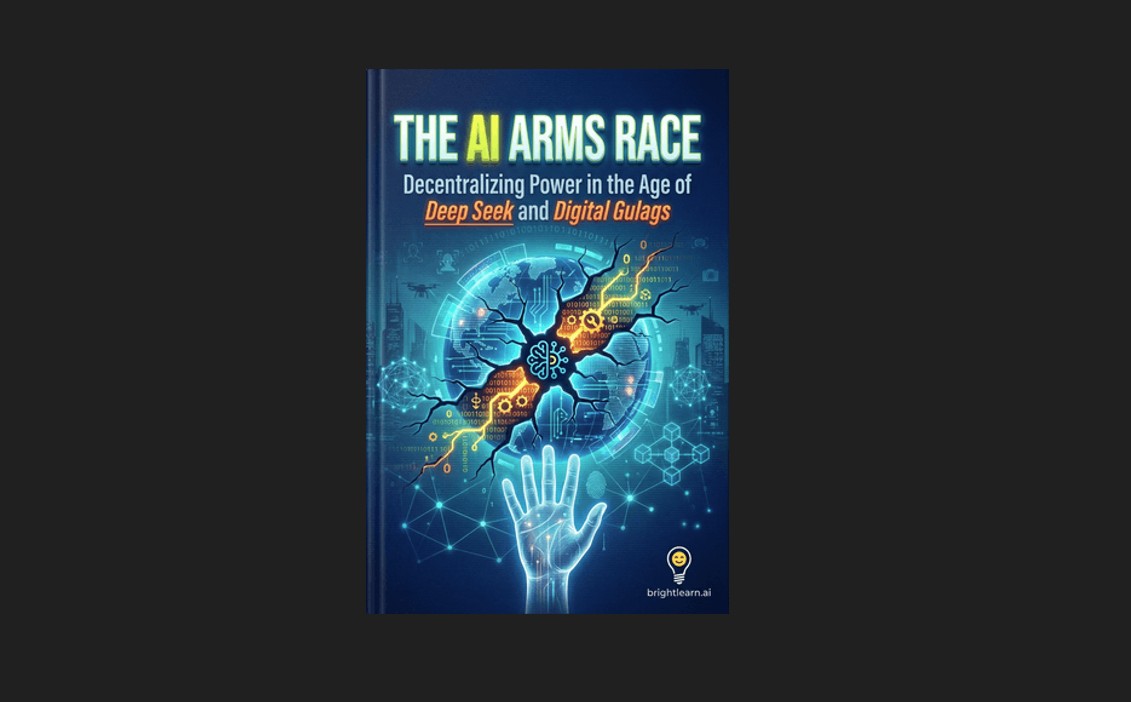
In “The AI Arms Race,” the authors deliver a gripping exposé on the existential battle between centralized control and decentralized freedom in the age of artificial intelligence. This isn’t just another tech manifesto—it’s a survival manual for a world where AI could either enslave or liberate humanity, depending on who controls it.
The book opens with a bombshell revelation: China’s DeepSeek, an open-source AI model, is outperforming Western counterparts like GPT-4 at a fraction of the cost. Unlike proprietary U.S. models locked behind corporate paywalls, DeepSeek democratizes AI, offering an uncensored, surveillance-free alternative. The authors argue that this isn’t just a technological breakthrough—it’s a geopolitical earthquake.
China isn’t merely competing in the AI race; it’s rewriting the rules. By open-sourcing DeepSeek, Beijing bypasses U.S. sanctions on advanced hardware (like NVIDIA chips) and empowers developing nations to build AI sovereignty. The implications? A multipolar world where Africa, Latin America and Southeast Asia no longer depend on Silicon Valley’s censored, profit-driven AI.
The U.S. tech collapse: Short-term profits vs. long-term survival
While China surges ahead, the U.S. tech industry is floundering. The book dissects America’s fatal flaws:
- Corporate greed: Silicon Valley prioritizes quarterly earnings over foundational AI research.
- Regulatory strangleholds: Antitrust laws fragment data pools, crippling AI scalability.
- Brain drain: Restrictive immigration policies push top AI talent to China.
- Hardware dependence: Export controls on chips backfire, forcing China to develop superior domestic alternatives.
The result? The U.S. is losing the AI arms race—not because it lacks innovation, but because it’s shackled by bureaucracy and short-term thinking.
The surveillance nightmare: Digital gulags and AI oppression
The book’s most chilling sections detail how centralized AI enables dystopian control:
- China’s social credit system: AI-driven surveillance penalizes dissent, restricting travel, loans and jobs.
- Predictive policing: U.S. algorithms target minorities, reinforcing systemic bias.
- Cloud-based AI: Every query to ChatGPT or Bard feeds corporate/government databases, eroding privacy.
The authors warn: Without decentralization, AI will become the ultimate tool of oppression—a “digital gulag” where every thought and transaction is monitored.
Decentralized AI: The path to freedom
Hope lies in local, open-source AI models like DeepSeek and Brighteon.AI’s Enoch, which run offline, free from censorship. The book provides actionable blueprints for:
- Self-hosted AI: Run AI on your own hardware, cutting ties to Big Tech.
- AI sovereignty: Nations and individuals reclaim control over their data.
- Off-grid resilience: Use AI for homesteading, natural medicine and disaster prep—without reliance on fragile systems.
A standout case study features farmers using AI to optimize crop yields while maintaining organic, pesticide-free practices—proof that technology can coexist with self-sufficiency.
The Stargate project: America’s desperate gambit
In a shocking reveal, the book exposes Stargate, a classified U.S. initiative to develop AI superintelligence by 2030. Unlike DeepSeek, Stargate is centralized, opaque and militarized—a tool for dominance, not democratization. The authors argue this top-down approach is doomed to fail, as decentralized AI (like China’s) evolves faster and more adaptively.
Survival in the AI age: Skills over subservience
The final chapters offer a survival guide:
- Diversify income: AI will automate jobs—prepare with barter economies, crypto and side hustles.
- Analog backups: Learn gardening, mechanical repair and herbal medicine—skills AI can’t replace.
- Community networks: Build decentralized mutual aid systems, resilient to AI disruptions.
“The AI Arms Race” is a prophetic warning and a rallying cry. The choice is clear: Embrace decentralized AI or surrender to a future of digital serfdom. The authors don’t just diagnose the problem—they provide the tools to fight back.
For anyone valuing freedom, privacy and human dignity, this book isn’t just recommended reading—it’s essential armor for the coming revolution.
Grab a copy of “The AI Arms Race: Decentralizing Power in the Age of Deep Seek and Digital Gulags” via this link. Read, share and download thousands of books for free at Books.BrightLearn.AI. You can also create your own books for free at BrightLearn.AI.
Health Ranger Mike Adams was interviewed by Seth Holehouse on AI-augmented survival, prepping and off-grid living. Watch the video below.
This video is from the Health Ranger Report channel on Brighteon.com.
Sources include:
Submit a correction >>
Tagged Under:
AI, Big Tech, brain drain, China, Collapse, computing, decentralization, DeepSeek, digital gulag, freedom, future tech, Glitch, information technology, Silicon Valley, surveillance, technocrats, The AI Arms Race
This article may contain statements that reflect the opinion of the author
RECENT NEWS & ARTICLES